Description
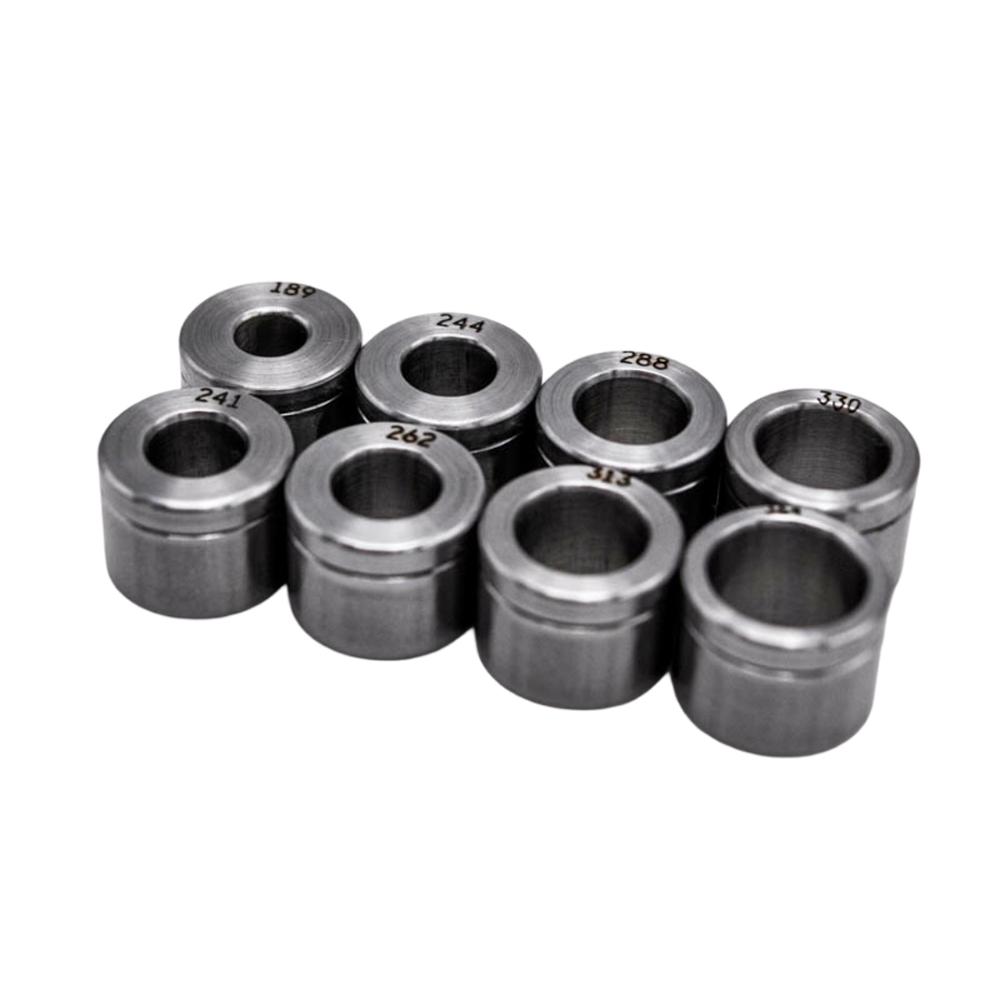
This is the .245 bushing from L.E. Wilson's long-running neck sizing system, and it does one job extremely well: it sizes the outside of your case neck to a set diameter so your brass holds the bullet with the exact amount of grip you're after. By swapping bushings instead of leaning on a one-size expander ball, you keep the neck concentric and work the brass less, which pays off in tighter groups and longer case life. The marked .245 refers to the middle of the bushing, which is reamed with a slight taper, so the sizing is gentle and even.
How the .245 Bushing Earns Its Keep
This bushing drops into a Wilson Neck Die or a Wilson Bushing Type Full Length Sizing Die, both sold separately. The beauty of the setup is that you can keep a small stable of bushings on the bench and tune neck tension on the fly for different bullets, brass lots, or seasons. Wilson machines these in .001 inch increments, so you can get precise about the grip you want rather than settling for whatever a fixed expander hands you. One handy trick: flipping the bushing so the markings face the case gives you a touch tighter sizing when brass has work-hardened and starts springing back.
Picking the Right Size for Your Load
The .245 number tells you what neck diameter you'll end up with, but getting there takes a quick measurement. The simplest method is to mic a loaded round at the neck where the bullet sits, then subtract .002 to .003 inch for proper tension. You can also measure your neck wall thickness, double it, add the bullet diameter, and subtract that same .002 to .003. Since every brand of brass carries different wall thickness, it's worth checking your own cases rather than guessing.
Built to Wilson Standards
Made from hardened, precision ground steel, this bushing is built to hold its dimensions through years of use. Because it's a steel bushing, a light coat of case lube keeps things running smooth and prevents galling. Wilson bushings also play nice with Wilson, Redding, Hornady, and RCBS bushing-style dies, though they won't fit Forster setups. L.E. Wilson has been turning out precision reloading tools out of Washington since 1927, and this little piece carries that same reputation for doing exactly what it says.
Key Specifications
- Manufacturer: L.E. Wilson
- Manufacturer Part Number: B-245
- UPC: 815145024350
- Nominal Diameter: .245 inch
- Material: Hardened, precision ground steel
- Tool Type: Neck sizing bushing
- Sizing Increments: .001 inch
- Compatibility: Wilson Neck Dies and Wilson Bushing Type Full Length Sizing Dies
- Cross Compatibility: Fits Wilson, Redding, Hornady, and RCBS bushing dies (not Forster)
- Country of Origin: USA
- Shipping Weight: 0.02 lb
What’s Included
- One L.E. Wilson .245 steel neck sizing bushing (B-245)
Frequently Asked Questions
What die does the Wilson .245 neck sizer bushing fit?
It's made for the L.E. Wilson Neck Die or the Wilson Bushing Type Full Length Sizing Die, with the die body sold separately. It will also interchange with Redding, Hornady, and RCBS bushing-style dies. It will not fit Forster dies.
How do I know if the .245 is the right bushing size for my load?
Measure the diameter of a loaded round at the neck where the bullet sits, then subtract .002 to .003 inch, and that number is your target bushing size. You can also measure neck wall thickness, multiply by two, add the bullet diameter, and subtract the same .002 to .003. Keep in mind different brands of brass have different wall thickness, so measure your own cases to be sure .245 lines up.
Do I need to lube the case necks with this steel bushing?
Yes, a light coat of case lube is recommended since this is a steel bushing. It keeps the sizing smooth and helps prevent galling on the necks. A quick wipe of lube on the neck area before running cases is all it takes.
Why use a bushing instead of a standard expander ball?
A bushing sizes the outside of the neck to a set diameter, so you control neck tension without dragging an expander ball back through the neck. That keeps the neck more concentric and works the brass less, which helps accuracy and extends case life. Reloaders often keep several bushing sizes on hand to fine-tune tension for different bullets and brass.





Reviews
There are no reviews yet.