Description
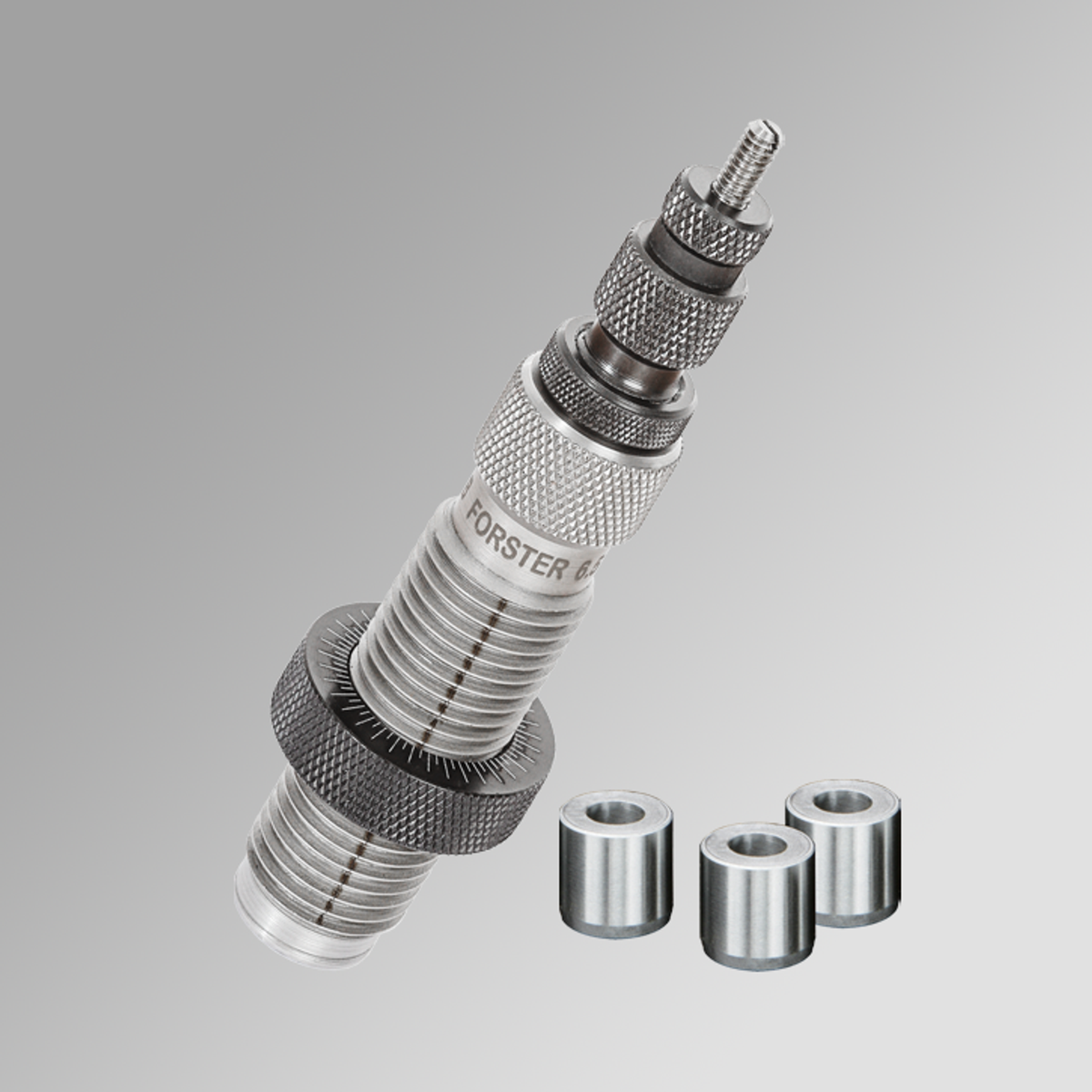
The 6mm Dasher is a cartridge built for people who chase single-hole groups, so your brass prep deserves tooling that can keep up. Forster's Bushing Full-Length Sizer Die does three jobs in one pass: it sizes the case body down to fit a minimum-spec chamber, bumps the shoulder to set your headspace, and squeezes the neck using an interchangeable bushing instead of a fixed opening. That bushing is the whole point. Swap it out and you control precisely how much the neck gets worked, which means your brass holds the bullet with the tension you choose rather than whatever the die decides for you.
Why the 6mm Dasher Bushing Die Earns Its Spot on the Bench
Standard sizing dies tend to overwork case necks, especially on thicker brass, and that shortens case life while nudging your runout numbers the wrong way. A bushing setup only reduces the neck as much as the bushing dictates, so you get more firings out of a batch of good Dasher brass and tighter, more repeatable neck tension round to round. Picking a bushing is simple: measure the outside neck diameter of a loaded round and go roughly .002 inch under that for the common two-thousandths of tension most loads like. From there you can tune tighter or looser depending on your brass and barrel.
What Comes in the Forster Dasher Die Kit
This is the kit version, so you get the hand-polished die plus three pre-selected bushings sized at .264, .266, and .268 inch. That spread covers most Dasher brass right out of the gate and lets you move up or down a couple thousandths as your cases work-harden or you switch between turned and un-turned necks. The die uses Forster bushings specifically, so keep that in mind if you plan to build out your bushing collection later.
Getting Consistent Results With the Bushing Full-Length Sizer
For the straightest, most concentric cases, a lot of reloaders pair a bushing die with a mandrel step or set the expander to let the bushing do the tension work. Even neck wall thickness matters here, since variation in the brass translates to variation in tension. Turned necks and a correctly chosen bushing are the recipe for the kind of consistency the Dasher rewards.
Key Specifications
- Cartridge: 6mm Dasher
- Die Style: Bushing Full-Length Sizing Die
- Included Bushings: .264, .266, .268 inch
- Bushing Increments: Available separately in .001 inch steps
- Bushing Compatibility: Forster neck sizing bushings
- Material: Steel, hand-polished
- Manufacturer: Forster Products
- Manufacturer Part Number: FBK4275
- UPC: 757253990588
- Shipping Weight: 0.575 lbs
- Country of Origin: United States
What’s Included
- Forster 6mm Dasher Bushing Full-Length Sizing Die
- Three neck bushings (.264, .266, and .268 inch)
Frequently Asked Questions
What does the Forster 6mm Dasher bushing full-length die actually size?
It does three things in one stroke. The body of the die sizes the case body down to fit a minimum-spec chamber, the die sets up to bump the shoulder for proper headspace, and the bushing sizes the neck. The bushing is what lets you control how much the neck gets worked, so you set the neck tension rather than accepting a fixed amount.
How do I pick the right bushing size?
Measure the outside neck diameter of a loaded, seated round with a good caliper or micrometer, then subtract about .002 inch. That gets you close to the roughly two-thousandths of neck tension most loads like. The kit includes .264, .266, and .268 bushings, so you can start there and fine-tune from the results on target.
Can I use Redding or Wilson bushings in this Forster die?
No, the Forster bushing dies are designed to run Forster bushings. If you want to expand your bushing selection down the road, stick with Forster bushings, which are offered separately in .001 inch increments across a wide range of sizes.
Will this die help my Dasher brass last longer?
That is one of the main reasons people go bushing. Because the neck is only reduced as much as the bushing dictates instead of being over-squeezed and then pulled back open by a traditional expander, the brass gets worked less. Less working generally means more firings before the necks start to give up, along with more consistent tension round to round.




Reviews
There are no reviews yet.