Description
Anyone who runs a suppressor long enough knows the routine: carbon, lead, and unburned powder build up in the baffles, and eventually a user-serviceable can needs to come apart for a real scrubbing. The Banish 4959 is the tool that makes that job painless. It gives you a controlled, hardware-store-simple way to push the baffle stack out of the tube without prying, hammering, or gouging the internals with a screwdriver you found in a drawer.
What Makes the Banish 4959 Worth Keeping on the Bench
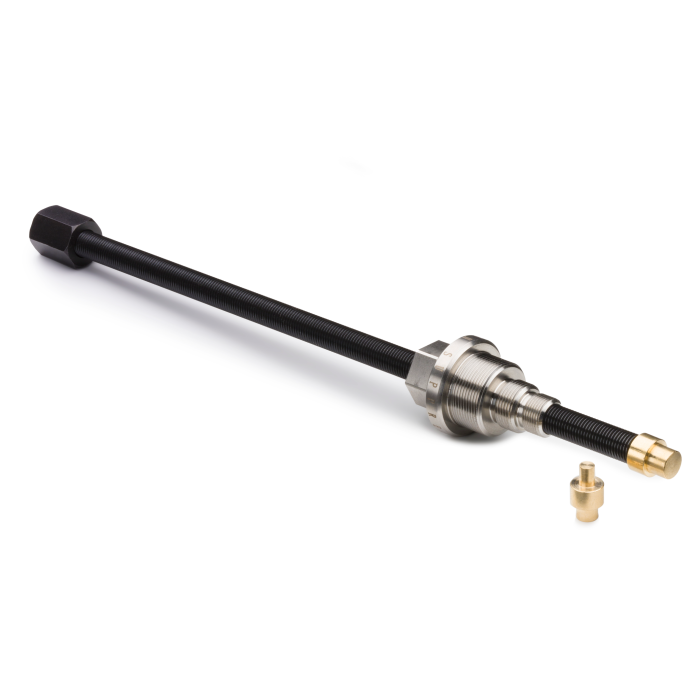
The heart of this tool is a piloted brass pusher tip. Brass is softer than the steel and aluminum baffles it contacts, so it does the pushing without leaving marks or scratching protective coatings. The pilot keeps everything centered as you drive the stack out, which means even pressure and no cocked, stuck baffles. The body is built from corrosion-resistant alloy steel, so it holds up to solvent exposure and years of use in a dirty shop environment.
Fitment for the Banish Baffle Removal Tool
This one is designed to break down any .308, .223, or .22 rimfire silencer that has a removable front-end cap and threads of either 5/8×24 TPI or 1/2×28 TPI. That covers a huge slice of the user-serviceable market, from rimfire plinking cans to centerfire rifle suppressors built to come apart. The brass tip is sized to work across those .22, .223, and .308 thread patterns, so one tool handles the common calibers most owners are running.
Why It Belongs in Your Cleaning Kit
Rimfire cans especially foul fast and heavy, and getting the baffles out is half the battle when it comes time to soak and scrub. Trying to knock a stubborn, carbon-locked baffle stack loose with the wrong tool is how coatings get ruined and edges get dinged. Having the right pusher on hand turns a frustrating fight into a quick step, and clean baffles keep your suppressor performing the way it should. Toss it in the kit next to your solvent and nylon brushes and you are set for cleaning day.
Key Specifications
- Manufacturer: Banish (Silencer Central)
- Model: 4959 Baffle Removal Tool
- Manufacturer Part Number: 100000310146
- UPC: 810171221780
- Construction: Corrosion-resistant alloy steel
- Pusher Tip: Piloted brass
- Compatible Calibers: .22 rimfire, .223, .308
- Compatible Threads: 5/8×24 TPI and 1/2×28 TPI
- Suppressor Type: User-serviceable with removable front-end cap
- Color: Black
- Length: 10.6 in
- Product Type: Silencer Accessory
What’s Included
- Banish 4959 Baffle Removal Tool with piloted brass pusher tip
Frequently Asked Questions
What suppressors does the Banish 4959 baffle removal tool work with?
It is built to disassemble any .308, .223, or .22 rimfire silencer that has a removable front-end cap and threads of either 5/8×24 TPI or 1/2×28 TPI. That covers most user-serviceable cans on the market, including a lot of the Banish lineup. If your suppressor is fully welded or sealed, it is not meant to come apart and this tool will not apply.
Why does the tool use a brass pusher tip?
Brass is softer than the steel and aluminum used in most baffles, so it pushes the stack out without scratching surfaces or damaging protective coatings. The tip is also piloted, which keeps everything centered and applies even pressure as the baffles come out. That combination is what lets you break down a dirty can without dinging the internals.
How often do I actually need to take my suppressor apart to clean it?
It depends on caliber and how much you shoot. Rimfire cans foul fast and often get cleaned every 300 to 500 rounds, while centerfire rifle suppressors accumulate less lead and rarely need internal scrubbing. Always follow your manufacturer's guidance, and only disassemble cans that are designed to be user-serviceable.
Do I need any other tools to clean my baffles after using the Banish 4959?
The 4959 handles the disassembly, but you will want a suppressor-safe solvent and a nylon or bronze brush for the actual scrubbing. Match the brush to your baffle material since steel brushes can scratch aluminum. A parts tray and clean rags round out a simple cleaning kit.





Reviews
There are no reviews yet.