Description
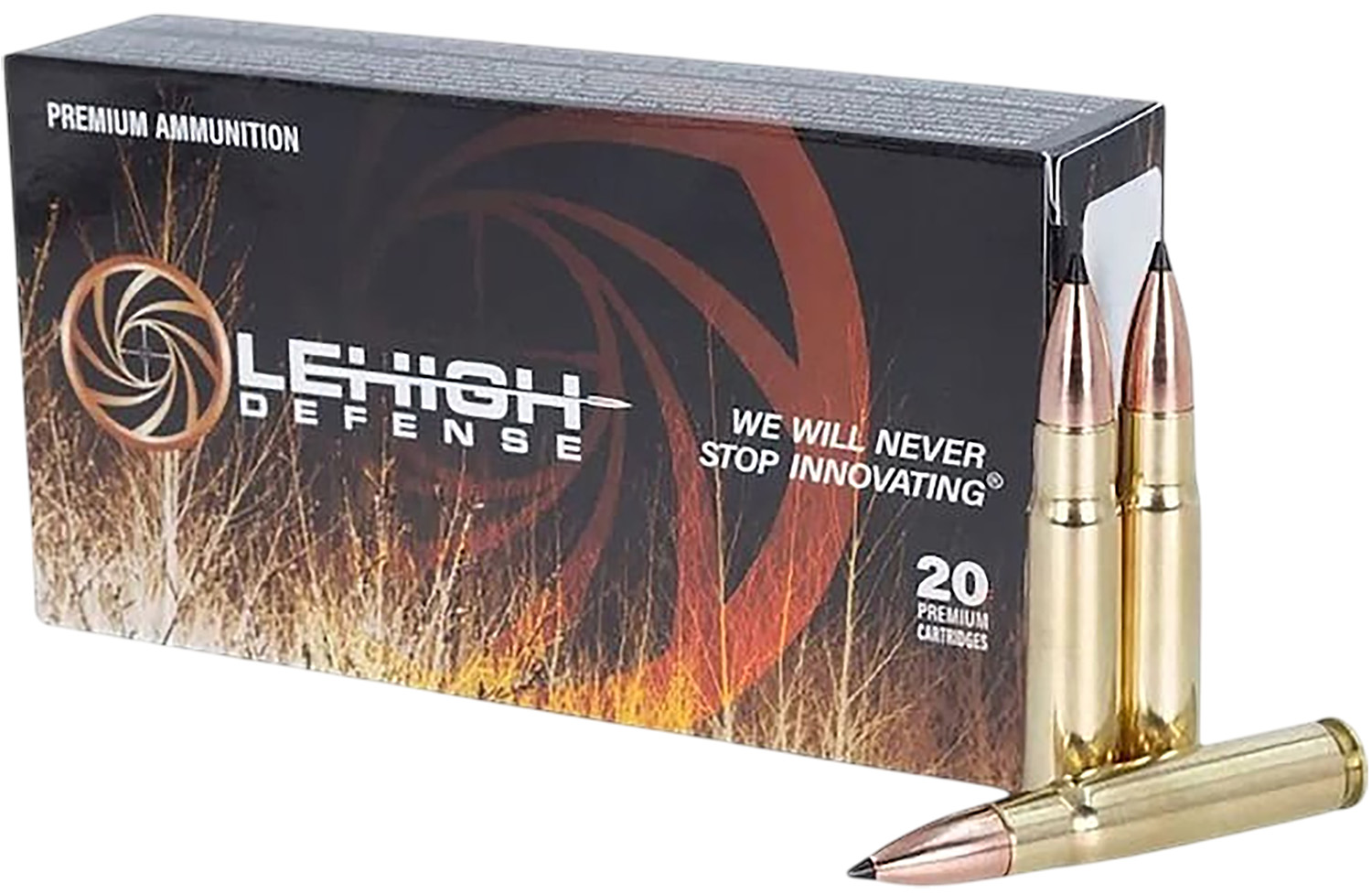
Wilson Combat paired with Lehigh Defense to create a .358 Winchester load that bridges two opposing philosophies of terminal performance. Rather than forcing you to choose between rapid expansion or deep penetration, the 180-grain Tipped Controlled Chaos bullet delivers both. The polymer tip adds ballistic coefficient for a flatter trajectory and improved long-range performance, while the copper solid construction won't fragment when hitting barriers like bone, wood, or hard intermediate barriers.
How the Tipped Controlled Chaos Performs
When the 180-grain Tipped Controlled Chaos enters soft tissue or fluid, the front portion sheds into multiple curled petals that radiate outward from the bullet's path. This shedding creates a massive temporary wound cavity and energy spike at the point of impact. Simultaneously, the base of the bullet continues in a straight line, providing deep penetration through the vitals. This combination delivers quick incapacitation while maintaining the penetration needed to handle angled shots or tougher game.
The .358 Winchester Advantage
Introduced in 1955, the .358 Winchester earned its reputation as one of the best woods cartridges ever designed. It's a necked-up .308 Winchester that generates meaningful velocity from a compact case, making it ideal for hunting in timber and brushy terrain where ranges tend to be shorter. The 180-grain bullet weight sits right in the sweet spot for the cartridge, delivering excellent performance on deer-sized game while maintaining the velocity needed for consistent expansion. Wilson Combat loads these rounds to proper pressure using quality brass cases and precision assembly, giving you ammunition you can trust for your next hunt.
What Makes This Load Different
Each round ships with 20 cartridges per box, loaded with consistent precision. The Tipped Controlled Chaos bullet design means you're not dealing with separate projectile performance philosophies. You get the ballistic advantage of the polymer tip combined with the terminal performance of a purpose-built copper bullet. Unlike traditional expanding bullets that lose weight or copper solids that sometimes over-penetrate, this design performs predictably across a range of real-world scenarios.
Key Specifications
- Caliber: .358 Winchester
- Bullet Weight: 180 grains
- Bullet Type: Lehigh Defense Tipped Controlled Chaos (TCC)
- Case Type: Brass
- Rounds Per Box: 20
- Manufacturer: Wilson Combat
- Manufacturer Part Number: LA358180TCC
- UPC Code: 810129407105
What’s Included
- 20 rounds of Wilson Combat .358 Winchester ammunition
- 180-grain Lehigh Defense Tipped Controlled Chaos bullets
- Brass cases
Frequently Asked Questions
What makes Lehigh Defense Tipped Controlled Chaos bullets different from standard expanding rounds?
The TCC design sheds the front portion of the bullet into multiple petals when it hits soft tissue, creating significant energy transfer. The base of the bullet continues straight through for deep penetration. This gives you the benefits of rapid expansion and sustained penetration in one bullet, unlike traditional designs that force you to choose one or the other.
Is the .358 Winchester suitable for hunting elk and larger game?
The 180-grain Tipped Controlled Chaos is well-suited for deer and black bear when placed correctly. For elk and heavier game, the .358 Winchester typically performs better with heavier bullet weights like 200 or 225 grains. The lighter 180-grain load works well within reasonable hunting ranges but requires careful shot placement on larger animals.
Will this ammunition function reliably in older .358 Winchester rifles?
Wilson Combat loads to proper SAAMI pressures and uses standard brass cases, so reliability should be excellent in any properly maintained .358 Winchester rifle. The polymer-tipped design feeds smoothly in magazine-fed firearms and has been tested across multiple rifle platforms without feeding issues.
How does the polymer tip affect accuracy and ballistics compared to unprimed bullets?
The polymer tip adds ballistic coefficient, improving drag performance downrange and providing a flatter trajectory at distance. This translates to less hold-over at extended ranges compared to round-nose or standard soft-point designs. The tip also helps the bullet maintain velocity better through the air while still expanding reliably on impact.





Reviews
There are no reviews yet.