Description
Precision handloading comes down to control, and the Redding .291 Titanium Nitride Neck Sizing Bushing gives you exactly that. Instead of forcing your brass through a fixed sizing diameter and then dragging it back open over an expander ball, a bushing lets you squeeze the neck to the size you actually want in one clean step. That means less reshaping, better concentricity, and brass that lasts noticeably longer through more firings.
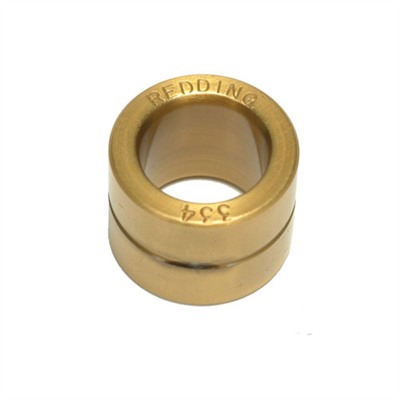
This is the .291 inch diameter in Redding's titanium nitride line. The TiN coating isn't just for looks. It bumps up the surface hardness and cuts down sizing friction, so the brass slides through smoother and sees less stress on each pass. The bushing self-centers on the case neck as it works, which is a big part of why bushing dies tend to produce rounds with better runout than standard setups. Every bushing is marked with its size, so there's no guessing which one is loaded in your die.
How the .291 TiN Bushing Fits Your Setup
Redding neck sizer bushings interchange freely across all Redding bushing-style sizing dies, including the Type S neck and full-length dies and the Competition Neck dies. They cover calibers from 17 through 338 in .001 inch increments, so once you've got the right die body you can stock whichever diameters match your brass.
Picking the Right Bushing Diameter
The tried and true method is to seat a bullet in a loaded case, measure the outside neck diameter with a precision micrometer, then subtract .001 to .002 inches. That accounts for brass spring-back and leaves you with proper neck tension to hold the bullet without overworking the case. Keep in mind that newer brass springs back a touch more than older brass, so some reloaders go a hair tighter and fine-tune from there. Most loads are happy somewhere between .001 and .003 inches of tension, and it's worth testing in your own rifle to see what it likes.
Made in the USA, hand-polished, and built to the standard that's made Redding a go-to name for precision reloaders and benchrest crowd alike.
Key Specifications
- Manufacturer: Redding
- Diameter: .291 inch
- Finish: Titanium Nitride (TiN) Coated
- Base Material: Heat-Treated Hardened Steel
- Surface Hardness: Rc 60-62
- Dimensions: 1/2 inch O.D. x 3/8 inch long
- Sizing Increments: .001 inch
- Caliber Coverage: 17 through 338
- Compatibility: All Redding Bushing-Style Sizing Dies
- Country of Origin: United States
- Manufacturer Part Number: 76291
- UPC: 611760762918
What’s Included
- One Redding .291 inch Titanium Nitride Neck Sizing Bushing (76291)
Frequently Asked Questions
What dies does the Redding .291 titanium nitride bushing work with?
It interchanges freely across all Redding bushing-style sizing dies, including the Type S Neck Sizing dies, Type S Full-Length dies, and Competition Neck dies. The bushings drop in and swap out easily, so you can keep a range of diameters on hand for different brass. As long as your die is a Redding bushing-style body, this bushing will fit.
How do I know if .291 is the right bushing size for my cartridge?
Seat a bullet in a loaded case, measure the outside neck diameter with a precision micrometer, then subtract about .001 to .002 inches. That gives you the target bushing size and accounts for brass spring-back after sizing. Since newer brass rebounds a little more than older brass, some reloaders size a touch tighter and tune from there.
What's the advantage of the titanium nitride coating over a plain steel bushing?
The titanium nitride treatment increases surface hardness and reduces sizing friction, so the case neck glides through with less effort. That slicker pass puts less stress on the brass, which can help extend case life over many firings. Beyond the coating, it offers the same precision sizing as Redding's heat-treated steel bushings.
Does using a bushing die mean I can skip the expander ball?
A bushing lets you size the neck to your exact desired diameter in a single step, so many reloaders run bushing dies without an expander ball at all. This reduces how much the neck gets reworked and helps improve concentricity. Some handloaders still prefer a mandrel or expander to uniform the inside of the neck, especially with brass that varies in wall thickness.





Reviews
There are no reviews yet.