Description
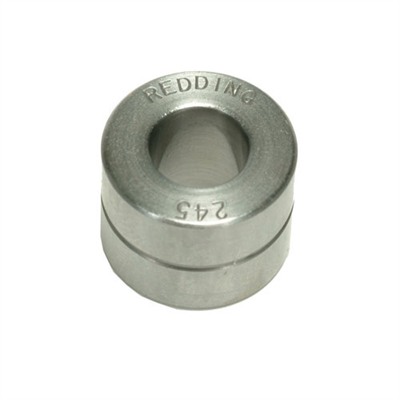
This is the .326" bushing from Redding's 73 style steel lineup, machined from heat-treated steel and built to give handloaders real control over neck tension. Instead of sizing a case neck more than it needs, a bushing lets you remove only the amount you want, which means less stress on your brass and more consistent results round after round. The sizing diameter is hand-polished to a surface hardness of Rc 60-62 to cut down on sizing effort, and the bushing is clearly marked with its size for quick identification on the bench.
Where the .326 Steel Bushing Fits
Redding neck sizing bushings share the same external dimensions, 1/2" O.D. by 3/8" long, and freely interchange across all Redding bushing-style neck sizing and full length dies. They also work with Wilson-style bushing dies, so this .326" piece slots right into most popular setups. The full steel range runs from .185" through .368" in .001" increments, covering calibers from .17 all the way up to .338, and this .326" size lands in the .30 caliber neighborhood.
Getting Your Redding Bushing Size Right
Picking the correct bushing is simple with a good micrometer. Measure the outside neck diameter of a loaded cartridge, then subtract about .001" to .002" to allow for brass spring back and give you the press fit that holds the bullet. You can also double your case neck wall thickness, add the bullet diameter, and subtract the same amount. For the most reliable results, your brass should have fairly uniform neck wall thickness or be neck turned, since inconsistent necks can throw off your final tension.
Steel vs. Coated, Straight Talk
The 73 style steel bushings are the no-frills workhorse of the Redding bushing family and perform beautifully with a little neck lube. Plenty of precision handloaders run steel bushings exclusively and never look back. Redding Imperial Sizing Wax or a similar lube keeps things sliding smoothly and protects your brass. If you later decide you want even lower friction, Redding also offers a Titanium Nitride version in the same sizes, but the steel does the job and does it well.
Key Specifications
- Manufacturer: Redding
- Manufacturer Part Number: 73326
- UPC: 611760733260
- Bushing Size (I.D.): .326"
- Style: 73 Style Heat-Treated Steel
- Material: Heat-treated steel, hand-polished
- Surface Hardness: Rc 60-62
- Outside Dimensions: 1/2" O.D. x 3/8" long
- Caliber Range (Line): .17 to .338
- Size Range (Line): .185" to .368" in .001" increments
- Compatibility: All Redding bushing-style dies; interchanges with Wilson-style bushings
What’s Included
- One Redding 73 style steel neck sizing bushing, .326"
Frequently Asked Questions
What dies will the Redding .326 steel bushing work with?
It fits all Redding bushing-style neck sizing and full length sizing dies, which share the same 1/2" O.D. by 3/8" long bushing pocket. It also interchanges with Wilson-style bushings, so it drops into most popular bushing die setups. The die and shellholder are sold separately.
How do I know if .326 is the right bushing size for my load?
Measure the outside neck diameter of a loaded cartridge with a micrometer, then subtract about .001" to .002" to allow for brass spring back and proper bullet tension. If your result lands near .326", this is your bushing. For the most consistent results your brass should have uniform neck wall thickness or be neck turned.
Do I need to lube my case necks when using the steel bushing?
Yes, a little neck lube is recommended with the heat-treated steel bushings and it makes sizing smoother while protecting your brass. Products like Redding Imperial Sizing Wax work great for this. Running un-lubed necks, especially freshly annealed ones, is hard on both the brass and the bushing.
What is the difference between the steel bushing and the Titanium Nitride version?
Both are made from the same heat-treated steel and share identical dimensions, but the Titanium Nitride version adds a surface coating that increases hardness and further reduces sizing friction. The plain steel bushing performs the same job and is a favorite of many precision handloaders when used with lube. Many reloaders start with steel and only move to coated bushings if they find themselves sizing high volume.



Reviews
There are no reviews yet.