Description
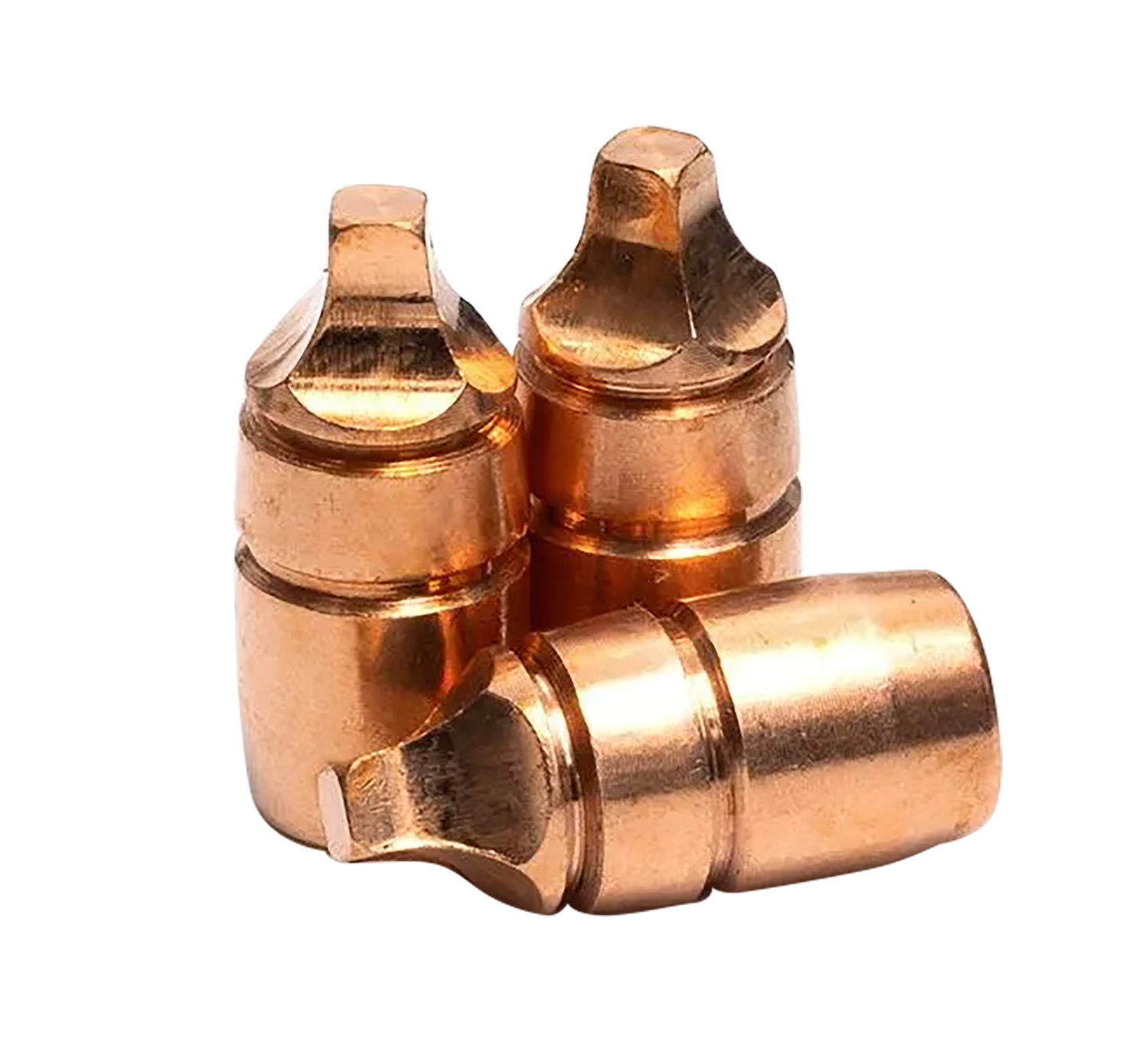
The Lehigh Defense Xtreme Cavitator is one of the more interesting projectiles you can run through a .30 Carbine, and it brings modern terminal performance to a cartridge that's been around since World War II. These are solid copper, lead-free bullets machined to a .308 diameter at 85 grains, sold 50 to a box for reloaders rolling their own carbine loads. Rather than relying on expansion like a hollow point, the Cavitator uses its shape to do the work, which is a different approach to wounding than most reloaders are used to.
What Makes the Xtreme Cavitator Tick
The nose is the whole story here. It's a flat, square profile with a concave face and an air-reservoir groove, and it's built to take advantage of what's called the cavitation effect. As the bullet passes through soft tissue, that geometry forms a vapor pressure spike at the nose that sheaths the flank in a sleeve of air, cutting side drag and letting the projectile drive deep while displacing tissue outward along the way. Lehigh combined ideas from their Xtreme Defense and Xtreme Penetrator lines to redirect hydraulic energy radially, which is how a non-expanding solid still produces a sizable permanent wound cavity.
Barrier Performance and Load Data for the Cavitator
That square nose also earns its keep on barriers. By spreading contact force across the face instead of a single point, it divides the hoop strength of whatever it's hitting, so it tends to shrug off drywall, wood, sheet metal, and glass without deforming or veering off course. For load building, the specs you'll want are a .308 diameter, 85 grain weight, an overall length of .690, a G1 ballistic coefficient of .151, and a sectional density of .128. Keep in mind the design needs velocity to work, with a minimum impact velocity around 750 fps, which the .30 Carbine easily delivers.
Lehigh Defense has been building monolithic copper projectiles out of Clarksville, Texas for years and is now part of the Wilson Combat family, so you're getting a component with a real engineering pedigree behind it. For anyone loading .30 Carbine for defense, hunting, or general tactical use who wants something that steps well beyond surplus ball ammo, these are worth a look on the reloading bench.
Key Specifications
- Manufacturer: Lehigh Defense
- Model: Xtreme Cavitator
- Manufacturer Part Number: 12308085SP
- UPC: 810025508302
- Applicable Caliber: .30 Carbine
- Bullet Diameter: .308
- Bullet Weight: 85 gr
- Bullet Type: Fluid Transfer Monolithic (FTM)
- Core Material: Copper
- Jacket Material: Copper
- Lead Free: Yes
- Ballistic Coefficient (G1): .151
- Sectional Density: .128
- Overall Length (OAL): .690
- Minimum Impact Velocity: 750 fps
- Quantity: 50 per box
What’s Included
- 50 Lehigh Defense Xtreme Cavitator 85 gr .308 monolithic bullets
Frequently Asked Questions
What caliber are these Xtreme Cavitator bullets made for?
These are .308 diameter, 85 grain projectiles designed specifically for loading .30 Carbine. The overall length and weight are tuned for that cartridge, so they're the right fit for anyone building carbine loads on the bench.
Are the Xtreme Cavitator bullets loaded ammunition or just projectiles?
These are component bullets only, not finished ammo. You'll need your own brass, primers, and powder to load them, so they're meant for reloaders rather than anyone looking for ready-to-fire cartridges.
How does the Cavitator work if it doesn't expand like a hollow point?
Instead of expanding, it relies on its machined geometry. The square, concave nose and air-reservoir groove create a vapor pressure spike that wraps the bullet in air to reduce drag and drive deep, while redirecting hydraulic energy outward to open up a wide wound channel. The design does need adequate velocity to perform, with a minimum impact velocity around 750 fps.
Are these bullets good for shooting through barriers?
The flat, square nose is one of the Cavitator's strong suits on barriers. It spreads contact force across the face rather than a single point, which helps it defeat materials like drywall, wood, sheet metal, and glass while holding its shape and staying on course.





Reviews
There are no reviews yet.