Description
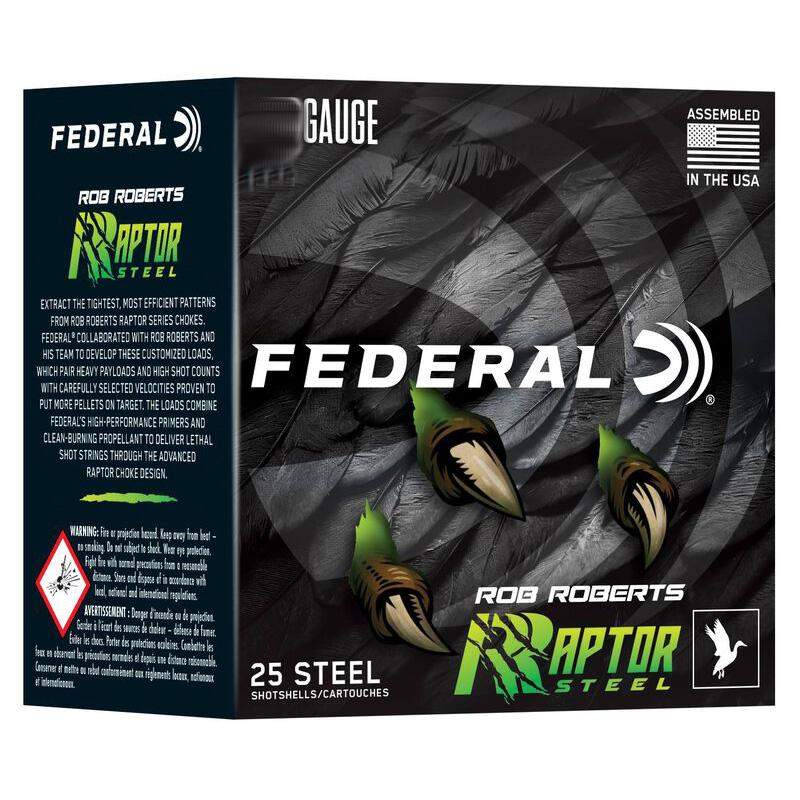
Federal partnered directly with Rob Roberts Custom Gunworks to build this 20 gauge load from the ground up around the Raptor Series choke line, and it shows. Instead of just slapping a new label on an existing steel shell, the engineering teams worked backward from the choke geometry to figure out what payload, shot size, and velocity would actually pattern tightest through those tubes. What you get is a 3 inch hull loaded with 1 ounce of #2 steel shot at 1400 fps, a combination that's earned a good reputation among 20 gauge duck hunters for balancing pellet count with the knockdown energy needed on bigger birds like mallards and close decoying geese.
Why the Raptor Steel 20 Gauge Load Is Built the Way It Is
Steel shot in a 20 gauge has always been a bit of a compromise. You're working with less payload than a 12 gauge, so every pellet needs to count. Federal leaned on Rob Roberts' pattern testing background to dial in a load that keeps shot strings dense and consistent rather than just fast. The primers and propellant are Federal's proven high-performance components, so ignition is clean and consistent shot after shot, which matters when you're trying to squeeze consistent patterns out of a smaller bore.
Pairing the Raptor Steel Shotshells With the Right Choke
While these shells will cycle and pattern fine through any steel-rated choke, they're specifically tuned to work with Rob Roberts' Raptor Series tubes. The #2 shot size lines up well with the RR2 for mid-range duck work over decoys or the RR3 if you're reaching out further for geese and open water divers. If you've already got a Raptor choke in your 20 gauge, this is the load it was designed to run.
Federal Raptor Steel in the Field
Hunters who've put rounds through a pattern board with #2 steel out of a 20 gauge often note it holds together better at 35 to 40 yards than lighter shot sizes, especially on bigger ducks that can shrug off smaller pellets. One 12 gauge version of this same Raptor Steel line has drawn praise for great patterning at long range in a modified choke, and the 20 gauge follows that same design philosophy in a smaller package. If you're running a 20 gauge for waterfowl and want a load that was actually engineered around choke performance rather than an afterthought, this one's worth having in the blind bag.
Key Specifications
- Manufacturer: Federal Ammunition
- Manufacturer Part Number: RRS2092
- UPC: 604544709698
- Gauge: 20 Gauge
- Shell Length: 3 inch
- Shot Weight: 1 oz
- Shot Size: #2 Steel
- Shot Material: Steel
- Muzzle Velocity: 1400 fps
- Rounds Per Box: 25
- Primer Type: 209
- Recommended Use: Waterfowl Hunting
- Choke Compatibility: Optimized for Rob Roberts Raptor Series chokes, works with standard steel-rated chokes
What’s Included
- 25 rounds of Federal Rob Roberts Raptor Steel 20 gauge shotshells
- 1 box (25 count)
Frequently Asked Questions
Do I need a Rob Roberts Raptor choke to shoot the Raptor Steel shotshells?
No, these loads will pattern fine through any standard steel-rated choke tube in your 20 gauge. That said, they were specifically developed alongside Rob Roberts Custom Gunworks to maximize pattern density through the Raptor Series chokes, so if you already run one of those tubes, this is the load it was tuned for.
Is #2 steel shot a good choice for ducks and geese out of a 20 gauge?
Yes, #2 steel is a popular choice among 20 gauge waterfowl hunters because it strikes a good balance between pellet count and per-pellet energy on larger ducks like mallards and close decoying geese. It carries more knockdown power than smaller shot sizes like #4, which matters since a 20 gauge already has less payload to work with than a 12 gauge.
How does the 1400 fps velocity affect recoil in a 20 gauge?
Federal and Rob Roberts specifically dialed the velocity to work with the 1 ounce payload rather than just chasing top speed, so recoil stays manageable for a 3 inch 20 gauge load. It's a similar velocity class to other high-performance steel waterfowl loads on the market, so if you've shot Speed-Shok or comparable loads before, the felt recoil should feel familiar.
What's the difference between the #2, #3, and #4 shot options in this line?
Shot size affects both pellet count and the size of bird you're best suited to take. The #2 shot in this listing carries fewer, larger pellets with more downrange energy, making it a solid pick for bigger ducks and geese, while the #3 and #4 options trade some energy for higher pellet counts, which can work well on smaller ducks and closer shots.





Reviews
There are no reviews yet.