Description
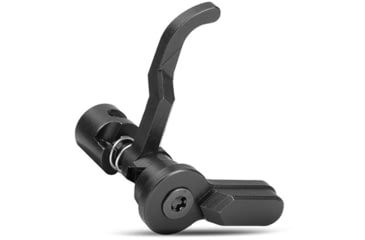
The Atrius ADG-FRS-S takes a clever approach to forced reset. Instead of dropping in a whole new trigger, it replaces your factory safety selector with a single-side, three-position lever. Flip it to SAFE, SEMI, or SUPER-SEMI depending on what you want the rifle to do. In that top position, the selector's cam drives the trigger back to reset as the bolt cycles, letting you hold a steady rearward pull while the rifle fires in fast, controlled semi-auto. The result is quicker, more consistent follow-up shots, and when you flip back to SAFE it locks up like any standard two-position selector would.
What Sets the Atrius FRS Apart From an FRT Trigger
Because the ADG-FRS-S works off your existing mil-spec fire control group, it puts less strain on your rifle than a traditional forced reset trigger. FRT systems tend to accelerate internal wear, while this design leans on mechanical leverage to do the job. It's machined from heat-treated 4140 steel with a corrosion-resistant black finish, so it holds up to mud, rain, sweat, and hard range days. This is the same grade of steel you'll find in quality bolt carrier groups and fire control parts, so durability is not an afterthought here.
Fit and Feel of the ADG-FRS-S
The lever is textured and chamfered with aggressive ergonomics, so your thumb lands on it fast even under stress. The 90-degree throw gives you crisp, tactile clicks with no mushy play. It's built for mil-spec AR-15 lowers chambered in .223 Remington, 5.56 NATO, and .300 AAC Blackout, and it needs a full-dimension, uncut trigger bar to work right. Triggers with U-notches or relief cuts won't play nice, and your lower should have a low-shelf or full-profile trigger pocket.
Installing Your Atrius Forced Reset Selector
Installation is a drop-in job for most builds. You'll pull the pistol grip, remove your factory selector, then run the Atrius detent shaft and cam-lever into place using the included T10 screw with a 4-40 thread, torqued to 15 in-lbs with blue Loctite. Some builds may need minor fitment, which is normal for this kind of part. Running an H2 or H3 buffer helps keep things cycling smoothly in the SUPER-SEMI mode.
Key Specifications
- Manufacturer: Atrius Development Group
- Manufacturer Part Number: ADG-FRS-S
- UPC: 850079014008
- Model: ADG-FRS-S
- Type: Single-Side Forced Reset Selector
- Positions: SAFE / SEMI / SUPER-SEMI
- Firearm Fit: AR-15
- Caliber Compatibility: .223 Remington, 5.56 NATO, .300 AAC Blackout
- Material: Heat-Treated 4140 Steel
- Finish: Corrosion-Resistant Black
- Selector Throw: 90 Degrees
- Screw / Thread: T10, 4-40 Thread
- Torque Spec: 15 in-lbs with Blue Loctite
- Country of Origin: USA
What’s Included
- Atrius ADG-FRS-S single-side forced reset selector
- Detent shaft and cam-lever assembly
- T10 selector screw (4-40 thread)
- Selector spring
Frequently Asked Questions
What does the Atrius Forced Reset Selector do differently than a normal safety?
It adds a third position beyond the usual SAFE and SEMI. In the SUPER-SEMI setting, the selector's cam pushes the trigger back to reset as the bolt cycles, so you can hold a steady rearward pull and get fast, controlled semi-auto fire. Flip it back to SAFE and it locks up like a standard two-position selector.
Will the ADG-FRS-S work with any AR-15 trigger?
It's built for mil-spec fire control groups with a flat, full-dimension trigger bar. Triggers with U-notches or relief cuts, along with aftermarket units like Geissele, LaRue, or CMC, are not compatible. If you're running an upgraded trigger, you'd need to go back to a mil-spec group to use the selector.
Is the Atrius FRS hard to install?
Not really. It's a drop-in swap for your factory safety selector using the included T10 screw torqued to 15 in-lbs with blue Loctite. You pull the grip, remove the old selector, run the Atrius detent shaft and cam-lever into place, then reinstall your detent, spring, and grip. Some builds need minor fitment, which is normal for this kind of part.
Does the ADG-FRS-S wear out my rifle like an FRT trigger?
It's actually easier on your rifle. Because it uses a mechanically leveraged design running off your existing trigger group, it puts less strain on internal components than traditional forced reset triggers, which tend to speed up wear. Running an H2 or H3 buffer helps keep everything cycling reliably in SUPER-SEMI mode.




Reviews
There are no reviews yet.