Description
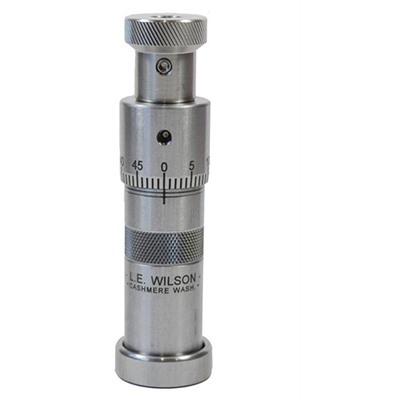
If you handload 280 Ackley Improved and chase tight groups, this is the seater that benchrest crowds swear by. The L.E. Wilson 280 Ackley Micrometer Top Bullet Seater is a chamber-type, inline design that fully captures your case and bullet before the close-fitting stem pushes the bullet straight into the neck. That captured alignment is the whole point here, and it's why this style consistently produces less runout than a conventional threaded seater die.
Instead of mounting in a reloading press, this one runs on an arbor press (sold separately) or even a mallet in a pinch. You set the case on the base with the bullet balanced on the neck, lower the die over both, and seat. Once you get the rhythm down, it's one of the fastest ways to seat a bullet with real consistency.
Dialing In Your 280 Ackley Seater
The micrometer top is where this die earns its keep. The engraved scale lets you adjust seating depth in .001" graduations, so finding your rifle's sweet spot during load development is a matter of turning a dial rather than fussing with lock rings. Major adjustments are handled through the 3/8"-24 TPI threads in the cap, and smaller tweaks come right off the micrometer. It's the kind of setup you can toss in a range bag and fine-tune between strings.
Built to Last, Built in the USA
Wilson machines these from stainless steel for a long-lasting finish and holds the seating stem to a very tight tolerance with the bore. The die ships with the standard seating stem, which handles the majority of bullet profiles out there. If you're loading long secant-ogive VLD or hybrid bullets, a dedicated VLD stem is available separately and is honed to cradle those longer ogives more precisely. For best results, pair it with uniform brass and consistent neck tension, and a quick check on a concentricity gauge will confirm just how straight your rounds are coming out.
L.E. Wilson has been making precision reloading tools in East Wenatchee, Washington since 1927, and this seater carries that same reputation for accuracy.
Key Specifications
- Manufacturer: L.E. Wilson
- Manufacturer Part Number: S28-ACK
- UPC: 815145029836
- Cartridge: .280 Ackley Improved
- Die Type: Chamber-Type Micrometer Top Bullet Seater
- Seating Adjustment: Micrometer, .001" graduations
- Cap Threads: 3/8"-24 TPI
- Material: Stainless Steel
- Operation: Arbor press or mallet (press sold separately)
- Seating Stem: Standard stem included
- Marking: Laser engraved
- Country of Origin: USA
- Number of Dies: 1
What’s Included
- L.E. Wilson 280 Ackley Micrometer Top Bullet Seater die
- Standard seating stem
Frequently Asked Questions
Do I need an arbor press to use the 280 Ackley bullet seater?
This is a chamber-type inline seater, so it's designed to run on an arbor press rather than a standard threaded reloading press. The arbor press is not included and is sold separately. In a pinch you can seat with a mallet, but an arbor press gives you the smoothest, most repeatable feel.
Does this die come with a VLD seating stem?
It ships with the standard seating stem, which works well for most common bullet profiles. If you're loading long secant-ogive VLD or hybrid bullets, L.E. Wilson offers a dedicated VLD stem separately that's honed to fit those longer ogives more precisely. Many reloaders find the standard stem does the job for everyday loads.
How does the micrometer top adjust seating depth?
The engraved micrometer scale lets you fine-tune seating depth in .001" increments, which makes load development at the bench or the range quick and precise. Larger adjustments are made through the 3/8"-24 TPI threads in the cap. It's an easy way to zero in on your rifle's preferred seating depth without guesswork.
Why use a chamber-type seater instead of a regular threaded die?
A chamber-type seater completely captures both the case and bullet inside the die before the stem pushes the bullet straight in, keeping everything in alignment. This design is a favorite among benchrest reloaders because it typically produces less bullet runout than a conventional 7/8"-14 seating die. The result is straighter, more consistent ammunition.



Reviews
There are no reviews yet.