Description
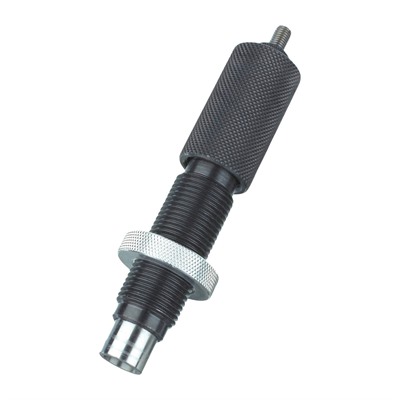
If you shoot 22 Creedmoor and care about runout, this is the die that built the reputation. Forster was first to market with this style of seater, and decades later it's still a benchmark for straight-line seating. The whole idea is simple but clever: a sliding chamber slides up and surrounds the entire case before the stem ever touches the bullet, so the case, bullet, and seating stem all stay locked in alignment through the full seating stroke. That's what separates it from a standard seater that only supports the neck.
How the 22 Creedmoor Bench Rest Seater Die Keeps Things Straight
Inside the die is a close-fitting chamber machined with a one-piece reamer and a concentric bullet channel just a hair larger than bullet diameter. That tight fit is what delivers co-axial seating and the low runout numbers these dies are known for. Plenty of folks running these report total indicated runout hovering right around a thousandth or less, and the die consistently measures as straight or straighter than pricier competitors. The hand-polished seating stem has also been refined over the years to play nice with modern hybrid, ballistic tip, and VLD bullet profiles, so seating pressure stays even and the ogive contact point stays true.
Setting Up the 22 Creedmoor Seater Die
This is the non-micrometer version, so you set your depth with the knurled, adjustable stem and lock it in. Once it's dialed, it holds. The stem uses a fine 27 TPI thread, which means a quarter turn moves you roughly nine thousandths and small tweaks get you right where you want to be. It threads into most standard presses, and if you're running a Forster Co-Ax you won't even need a shellholder. Worth noting it's a non-crimping design built purely for precision seating, so if you want a crimp you'd add a separate taper or roll crimp die.
For anyone loading match ammo in 22 Creedmoor and chasing tight groups, this seater earns its spot on the bench. It's the kind of tool that quietly does its job and never gives you a reason to second-guess your loads.
Key Specifications
- Manufacturer: Forster Products
- Cartridge: 22 Creedmoor
- Die Type: Bench Rest Seater Die (non-micrometer)
- Seating Style: Straight-line / co-axial, non-crimping
- Chamber: Sliding chamber sleeve, one-piece reamed
- Seating Stem: Hand-polished, adjustable, 27 TPI
- Lock Ring: Cross-bolt split lock ring
- Press Fit: Most standard reloading presses; no shellholder needed in Forster Co-Ax
- Country of Origin: USA
- Manufacturer Part Number: 5835
- UPC: 757253990991
What’s Included
- One Forster Bench Rest Seater Die
- One hand-polished seating stem
- Cross-bolt split die lock ring
- Complete instructions
- Die storage box
Frequently Asked Questions
Does the 22 Creedmoor Bench Rest Seater Die have a micrometer adjustment?
No, this is the standard Bench Rest Seater, not the Ultra Micrometer version. You set seating depth with the knurled adjustable stem and lock it down, which holds consistently once dialed in. If you swap bullets often or run a lot of seating depth tests during load development, the micrometer model may suit you better, but for a fixed load this one does the job beautifully.
Does this Forster seater die crimp the bullet?
No, it's a non-crimping design built strictly for precision seating and alignment. That's intentional, since crimping can work against the concentricity these dies are known for. If you need a crimp for your application, you'd pair it with a separate taper or roll crimp die.
Do I need a shellholder to use the 22 Creedmoor Bench Rest Seater Die?
It depends on your press. If you're using a Forster Co-Ax press, no shellholder is required because the press handles the case differently. In any other standard press, you'll want the shellholder recommended by that press manufacturer, and it's sold separately.
How does the sliding chamber improve accuracy?
The sliding chamber slides up and surrounds the entire outside diameter of the case before the stem touches the bullet, keeping case, bullet, and stem all in alignment through the seating stroke. That full support is what produces the straight, low-runout ammo these dies are famous for. Many reloaders report total runout right around a thousandth or less with this system.





Reviews
There are no reviews yet.