Description
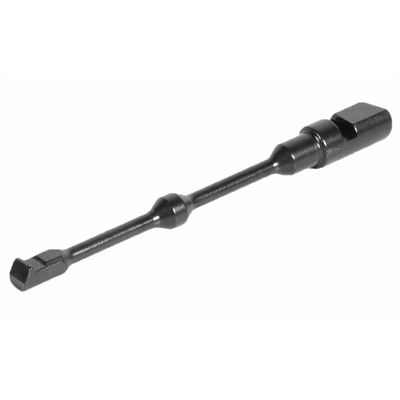
When your 1911's extractor starts losing tension or you're pulling stovepipes instead of brass, it usually means the extractor hook is being beaten down by constant contact with the case rim. The EGW Practical Extractor fixes this common problem by addressing the core design flaw in standard extractors.
How the EGW Practical Design Works Better
EGW made the extractor .025 inches shorter than a GI-spec part, which sounds small but makes a real difference downrange. That reduced length prevents the hook from riding up and down the case groove with each round, which is what dulls the hook and destroys tension over time. By cutting down on the amount of movement, you get a hook that stays sharper and maintains its grip far longer.
Strength Built Into Every Angle
The other weak point on traditional extractors is the hook itself. Most are cut at a 90-degree angle, which creates stress points that can chip or crack under use. EGW machines the hook at an acute angle instead, which gives more surface area to grip the case and distributes stress better. Both sides of the hook are radiused to eliminate sharp corners where breaks typically start, and the inside corner is machined with a special cutter that leaves a smooth radius rather than a sharp edge.
Lasting Durability Through Vacuum Heat Treatment
The extractor is vacuum heat treated to preserve the spring properties that make it work. This process pulls internal stress out of the steel and lets the material maintain its springing capability even after thousands of rounds. The result is an extractor that can hold proper tension for 70,000 rounds or more, which handles competitive shooting, training, and serious defensive use without losing reliability.
This is a Series 70 extractor, which means it works with standard 1911s and frames that do not have a firing pin block. It will not work with Schwartz-style safeties found on some Kimber and modern designs. The rear face is left slightly longer to allow a gunsmith to custom blend the fit to your specific slide for a seamless installation.
Key Specifications
- Manufacturer: Evolution Gun Works (EGW)
- Manufacturer Part Number: 10350
- UPC: 841370100781
- Series: Series 70
- Caliber: 9mm, 38 Super, 40 S&W
- Material: Carbon Steel
- Finish: Blued
- Hardness: 48 Rc
- Heat Treatment: Vacuum Heat Treated
- Expected Service Life: 70,000+ rounds
- Drop-In Installation: No, professional fitting recommended
- Length: 0.025 inches shorter than standard GI extractor
- Hook Design: Acute angle with radiused cuts for strength
- Country of Origin: USA
What’s Included
- 1 x EGW Practical Extractor (9/38/40 Series 70, Blued)
Frequently Asked Questions
Will this practical extractor work on my 1911?
This is a Series 70 extractor designed for 1911s without a firing pin block, which is the original 1911 design. It will not work with Schwartz-style safeties found on some Kimber models and modern designs. Check your pistol's specs before ordering. Professional fitting and installation are recommended for proper function.
How long does the EGW Practical Extractor actually last?
Thanks to vacuum heat treatment and the improved design, it can maintain proper tension for 70,000 rounds or more. That's significantly longer than standard extractors, which tend to lose tension after several thousand rounds of heavy use. The reduced length and strengthened hook design minimize wear and keep the part working reliably.
Why is this extractor shorter than the standard one?
The shorter length prevents the extractor hook from constantly banging against the case rim with each round fired. Standard extractors ride up and down the case groove, which gradually dulls the hook and causes tension loss that leads to failures. By reducing travel distance, this design keeps the hook sharper and maintains reliable extraction.
Do I need a gunsmith to install this?
Professional installation and fitting are recommended. The rear face is left slightly longer so a gunsmith can custom blend it to your slide for a perfect fit. Most 1911 extractors require some degree of fitting for proper installation, and proper tension adjustment is important for reliable function.





Reviews
There are no reviews yet.