Description
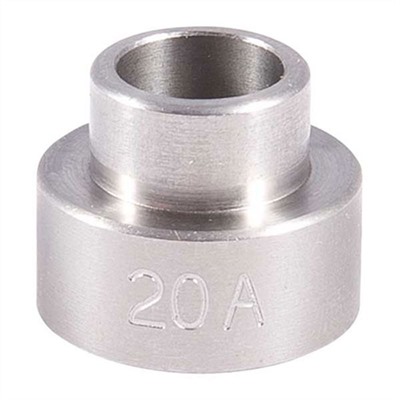
If you're serious about brass life and consistent chambering, measuring shoulder bump is one of those steps that separates good reloads from great ones. The Sinclair #25 Shoulder Bump Gage Insert handles that job for cartridges with a 25 degree shoulder, and it's machined from stainless steel with a taper that duplicates the actual shoulder of your brass. Drop it into a Sinclair or Hornady comparator body, clamp the body to your calipers, and you've got a clean way to track exactly how far you're pushing that shoulder back.
What the #25 Insert Fits
This one covers a solid lineup of standard magnum and mid-size cartridges that share the 25 degree shoulder angle. That includes 264 Winchester Magnum, 225 Winchester, 6.5×55 Swedish Mauser, 7mm Remington Magnum, 7mm STW, 30 Remington AR, 300 Winchester Magnum, 8mm Remington Magnum, and 338 Winchester Magnum. Each insert is engraved with its shoulder angle, so there's no guessing which one you've got in hand when you reach into the box.
Why Shoulder Bump Matters
Rather than reading off the SAAMI datum line, these gages indicate directly off the shoulder of the case, which gives you a more usable picture of how much sizing you're doing. The usual target is about .001 to .002 inch of bump for bolt-action target rifles and .003 to .005 inch for hunting or semi-auto rifles. You measure a fired case first, size one, then measure again and adjust your die in small increments until the numbers line up. Keeping that bump minimal stretches brass life, tightens up your headspace consistency, and keeps rounds chambering smoothly.
Getting the Most From the Sinclair #25 Bump Gage Insert
Secure the insert in the comparator body with a 5/64 hex wrench, then let the body self-center on the caliper blade before you lock it down. It's also a handy way to keep brass and loaded ammo sorted if you're running multiple rifles in the same chambering. Worth noting that Sinclair and Hornady inserts are cut differently and won't read identically to each other, so pick one system and stick with it for repeatable results.
Key Specifications
- Manufacturer: Sinclair International
- Insert Number: #25
- Shoulder Angle: 25 Degree
- Material: Stainless Steel
- Supported Cartridges: 225 Win, 264 Win Mag, 6.5×55 Swedish, 7mm Rem Mag, 7mm STW, 30 Rem AR, 300 Win Mag, 8mm Rem Mag, 338 Win Mag
- Use: Measuring shoulder bump for full-length sizing die setup
- Compatibility: Sinclair and Hornady comparator bodies
- Hex Wrench Required: 5/64 inch
- Manufacturer Part Number: 0910250
- UPC: 050806111325
What’s Included
- One Sinclair #25 stainless steel shoulder bump gage insert
Frequently Asked Questions
Which cartridges does the #25 bump gage insert work with?
The #25 insert is machined for cartridges that share a 25 degree shoulder angle. That covers a good range of standard magnums including 7mm Remington Magnum, 7mm STW, 300 Winchester Magnum, 338 Winchester Magnum, 264 Winchester Magnum, 8mm Remington Magnum, along with 225 Winchester, 6.5×55 Swedish Mauser, and 30 Remington AR. Check the shoulder angle in your loading manual if you're unsure about a specific round.
Do I need a comparator body to use this insert?
Yes. The insert on its own doesn't measure anything until it's seated in a comparator body that clamps to your calipers. It fits both Sinclair and Hornady comparator bodies, so if you already own one of those you're set to go.
How much shoulder bump should I be setting?
Sinclair generally recommends about .001 to .002 inch of bump for bolt-action target rifles and .003 to .005 inch for hunting rifles or semi-autos. You measure a fired case, size one, measure again, and adjust your die in small steps until you hit your target. Going light on the bump helps your brass last longer and keeps chambering consistent.
Will the Sinclair insert read the same as a Hornady insert?
No, and that's worth knowing. The Sinclair insert is cut with a taper that mimics the case shoulder, while Hornady uses a different cut, so the two won't give identical numbers. Pick one system and stay with it so your measurements stay repeatable from session to session.





Reviews
There are no reviews yet.