Description
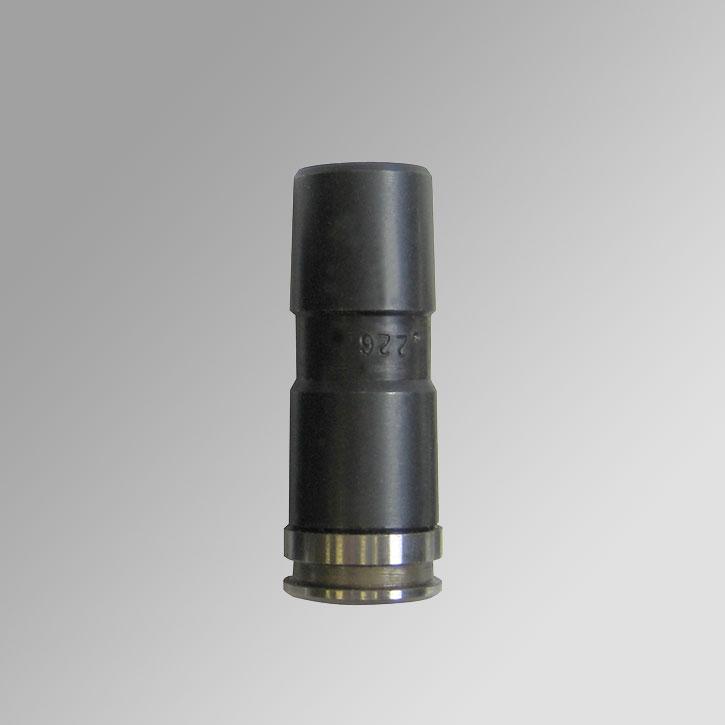
The .303 British headspaces off its rim, which makes a good gauge worth its weight when you're working on a Lee-Enfield or any rifle chambered for the round. This Forster No-Go gauge gives you a hard reference point for chamber length so you can tell whether a rifle is sitting inside the range you want or drifting long. Forster machines these from A2 tool steel and holds them to extremely tight tolerances, which is exactly the kind of consistency you want when safety is riding on the reading.
How the Forster No-Go Gauge Fits Into the Job
When you're finish-chambering a new barrel, the No-Go is your ceiling. You drop the gauge in with the extractor and ejector stripped out, then try to close the bolt with light pressure. If the bolt won't close, you're in good shape. If it closes on the No-Go, the chamber is running longer than the recommended max for a fresh barrel build. Keep in mind the No-Go is set tighter than SAAMI field max, so a bolt closing on it doesn't automatically mean a rifle is unsafe, just that it's past the snug spec you'd want on new work.
Where the .303 British No-Go Gauge Really Earns Its Keep
Surplus .303 rifles have led long, varied lives across decades and dozens of factories, so headspace on used guns is all over the map. Excessive headspace on a rimmed case like the .303 lets the case stretch on firing, which over time thins the web and can lead to case head separation. Checking with a gauge before you commit to shooting an unfamiliar rifle takes the guesswork out of it. A lot of folks running a No-Go alongside a Go gauge keep a Field gauge on hand too, since the Field is what you reach for when a rifle closes on the No-Go and you need to know if it's truly out of spec.
Forster has been building measuring tools since 1935, and their gauges are interchangeable across calibers sharing the same stock number. This one is caliber-specific to .303 British and reads honestly every time you pick it up.
Key Specifications
- Manufacturer: Forster Products
- Manufacturer Part Number: BG303N
- UPC: 757253002885
- Caliber: .303 British
- Gauge Type: No-Go
- Material: A2 Tool Steel
- Color: Steel
- Length: 1.5 in
- Manufacturing Tolerance: Held within 0.00015 in
- Standard: SAAMI spec
- Quantity: 1
- Country of Origin: United States
What’s Included
- (1) Forster .303 British No-Go headspace gauge
Frequently Asked Questions
How do I use the Forster .303 British No-Go gauge?
Strip the extractor and ejector out of the bolt, drop the No-Go gauge into the chamber, and gently try to close the bolt. If the bolt will not close on it, the chamber is within the recommended range. If it closes on the No-Go, the headspace is longer than the snug spec you'd want, and it's worth confirming with a Field gauge before drawing conclusions.
What's the difference between a Go, No-Go, and Field gauge for the .303 British?
The Go gauge represents minimum chamber length and should let the bolt close, confirming factory ammo will chamber. The No-Go is the upper limit recommended for new barrel work, and ideally the bolt won't close on it. The Field gauge is the maximum safety limit; if the bolt closes on a Field gauge, the headspace is excessive and the rifle needs attention.
Do I need this gauge for a surplus Lee-Enfield?
It's a smart move. Old .303 rifles vary widely in chamber dimensions from decades of service and different factories, and the .303 headspaces on its rim. Since excessive headspace on a rimmed case can lead to case stretching and eventual head separation, checking before you shoot an unfamiliar rifle is cheap insurance.
Is the Forster No-Go gauge accurate enough to trust?
Forster machines these from A2 tool steel and holds them to tolerances within 0.00015 inch, built to SAAMI specifications. They've been making precision reloading and gunsmithing tools since 1935 and have a long reputation for dependable, repeatable readings.





Reviews
There are no reviews yet.