Description
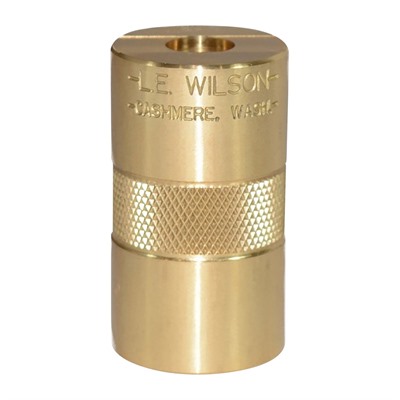
If you load your own .223, the L.E. Wilson Brass Case Gage is one of those tools that pays for itself the first time it keeps you from oversizing a batch of brass. This is the brass version of Wilson's longtime steel case gage, machined as a single solid piece with no moving parts to adjust or wear out. You drop a fired or sized case into it, and the milled surfaces on each end tell you two things fast: whether your case length is in spec, and where your shoulder sits for proper headspace.
L.E. Wilson has been building precision reloading gear since 1927, and the original case gage dates back to 1935 when founder Sam Wilson designed it to solve a case-separation problem for a fellow reloader. That same thinking is baked into this tool. By measuring a case in as-fired condition and then checking it again after sizing, you can see exactly how far you're setting the shoulder back and adjust your die so you're bumping it just enough and no more. That keeps your brass alive longer and your loads consistent.
Why the 223 Remington Brass Case Gage Earns Bench Space
The brass construction is the upgrade here over the standard steel line. Brass carries good corrosion resistance and a clean surface finish, which makes it a pleasant tool to handle and easy to keep looking sharp over years of use. The one-piece design checks overall length to flag cases that need trimming and uses datum-to-head length to confirm correct headspace, so you're covering the two measurements that matter most on bottleneck brass.
Getting the Most Out of Your Wilson Case Gage
Pair it with a set of calipers or the Wilson Case Gage Depth Micrometer and you can put real numbers to your shoulder bump instead of eyeballing it. Keep in mind this gage does not measure body diameters, and it's meant to be used with fired cases as your baseline for full-length sizing and trimming. For anyone chasing accuracy or just loading .223 in volume, this is the kind of simple, well-made tool that quietly makes every batch better.
Key Specifications
- Manufacturer: L.E. Wilson
- Manufacturer Part Number: CGB-223R
- UPC: 815145028570
- Cartridge: 223 Remington
- Material: Brass
- Style: Regular (one-piece, non-adjustable)
- Checks: Overall case length and datum-to-head headspace
- Intended Use: Fired cases, for full-length sizing and trimming reference
- Country of Origin: United States
- Shipping Weight: 0.7 lbs
What’s Included
- L.E. Wilson 223 Remington Brass Case Gage
- Instructions
Frequently Asked Questions
What does the 223 Remington Brass Case Gage actually measure?
It checks two key things on your .223 brass: overall case length, which tells you when a case needs trimming, and datum-to-head length, which confirms correct headspace and shows how far you're setting the shoulder back. Note that it does not measure body diameters. It's built to be used with fired cases as your starting point for full-length sizing and trimming.
How is the brass gage different from Wilson's standard steel case gage?
The function is the same, but the brass version is an upgrade over the standard steel line. Brass offers good corrosion resistance and a nicer surface finish, so it holds up well and stays looking clean over years on the bench. Both are one-piece, non-adjustable gages for the .223 Remington.
Do I need calipers to use the Wilson case gage?
You can do a quick visual check by dropping a case in and seeing where it sits against the milled steps, but to get real numbers on your shoulder bump you'll want calipers or the Wilson Case Gage Depth Micrometer. Measuring an as-fired case, then measuring again after sizing, lets you dial in your die precisely. That precision is what keeps your brass lasting longer.
Is this gage adjustable?
No, this is the regular one-piece style, which is non-adjustable and machined from a single piece of brass. Wilson's adjustable gage is a separate tool designed specifically for belted magnum cases. For standard rimless .223 Remington brass, this fixed gage is exactly what you want.





Reviews
There are no reviews yet.