Description
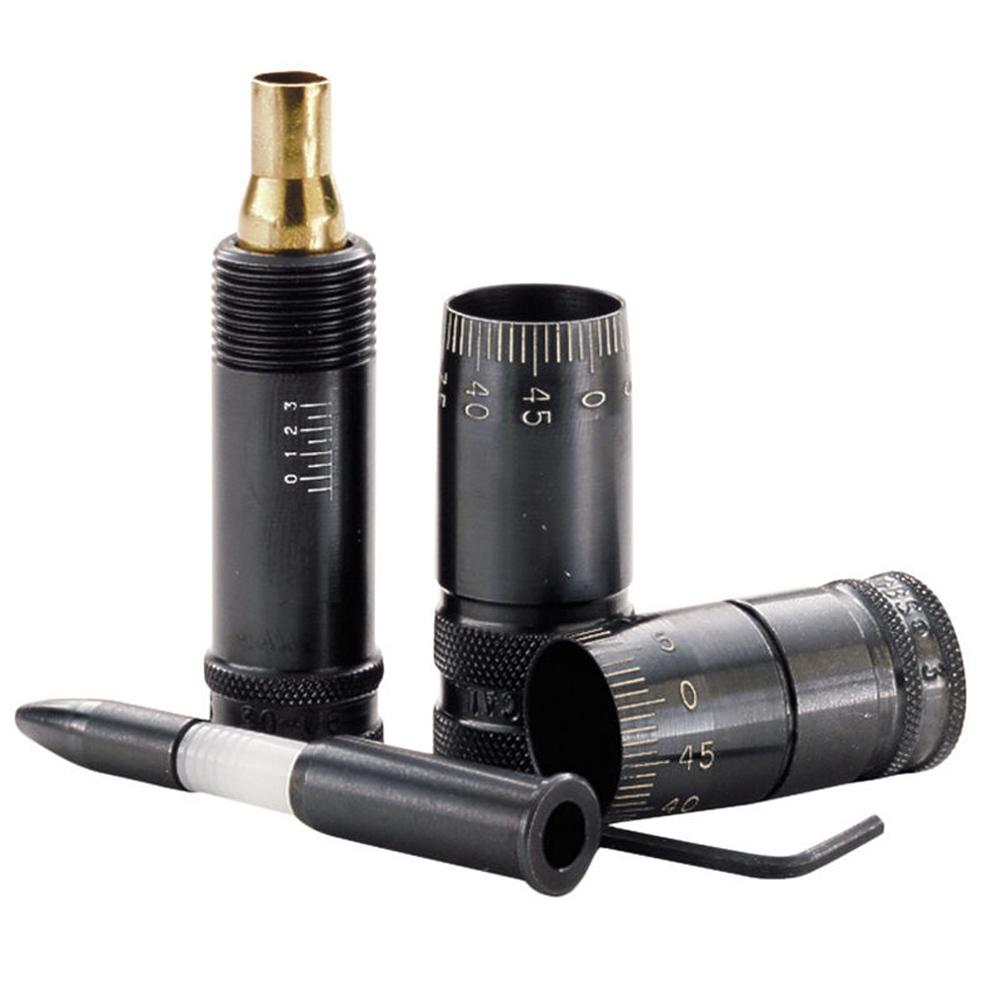
The RCBS Precision Micrometer for .22-250 Remington takes the guesswork out of setting up your dies. Instead of chasing feel and hoping your sizing is right, you get a direct reading of where your brass sits relative to SAAMI minimum chamber dimensions. It measures from the datum point on the case shoulder to the base, giving you repeatable numbers you can trust down to .001 inch. This is a caliber-specific tool built for .22-250 Rem only, so every reading is referenced to the exact cartridge you're loading.
What the .22-250 Precision Mic Does on the Bench
The body works like a short sleeve you drop your case into, primer end first, with the neck sticking out the top. Screw the headspace nut down until it stops against the shoulder and read the result. A reading of zero lines up with SAAMI minimum, and each mark above or below is a thousandth of an inch. Mic a handful of fire-formed cases from your rifle, average the numbers, then size a case and check it the same way. Now you can see exactly how far your die is moving the shoulder and adjust accordingly.
Setting Shoulder Bump With the RCBS Precision Micrometer
This is where the tool earns its keep. Most bolt gun loads run best with about .001 to .002 inch of shoulder setback from your fired average, while semi-autos usually want a touch more for reliable feeding. Bumping only what you need keeps cases from over-working and failing early, which means longer brass life and more consistent chambering. The kit also includes a bullet seating depth tool for dialing in your seater die, so you can reference seating depth as part of the same setup.
Why .22-250 Reloaders Reach for It
The .22-250 Remington is a flat-shooting varmint and target round where small changes in seating and sizing show up on paper. Having a dedicated micrometer for this cartridge means you spend less time guessing and more time building loads that repeat. It's a straightforward, well-made tool that pairs with your existing press and dies and becomes part of your regular case prep routine.
Key Specifications
- Brand: RCBS
- Model: Precision Mic
- Caliber: .22-250 Remington
- Manufacturer Part Number: 88302
- UPC: 076683883025
- Measurement Resolution: 0.001 inch
- Reference: SAAMI minimum chamber dimension
- Measures From: Datum point on case shoulder to case base
- Functions: Chamber headspace and bullet seating depth
- Caliber Specific: Yes, .22-250 Rem only
- Country of Manufacture: United States
- Shipping Weight: 0.7 lb
What’s Included
- RCBS Precision Mic body for .22-250 Remington
- Headspace nut (headspace gauge)
- Bullet seating depth tool / land nut
- Instructions
Frequently Asked Questions
What does the RCBS Precision Micrometer .22-250 actually measure?
It measures from the datum point on the case shoulder to the base of the case, giving you chamber headspace and bullet seating depth readings down to .001 inch. A reading of zero represents SAAMI minimum chamber dimension, and marks above or below show thousandths over or under that. This lets you see where your fired and sized brass fall so you can set your dies with real numbers.
How do I use it to set shoulder bump on my .22-250 brass?
Mic several fire-formed cases from your rifle and average the readings to establish your baseline. Then size a case and measure it again to see how far your die is pushing the shoulder back. Most bolt rifle loads do well with about .001 to .002 inch of setback from the fired average, while semi-autos generally want a bit more, and you adjust your sizing die until you hit that target.
Will this Precision Mic work for other calibers besides .22-250?
No, this is a caliber-specific tool made for .22-250 Remington only, as indicated by part number 88302. RCBS makes separate Precision Mic versions for other cartridges like .223 Rem, .243 Win, and .308 Win. If you load multiple calibers, you'll want the matching tool for each one.
Does the RCBS Precision Micrometer help with brass life?
Yes. By showing you exactly how much your die is setting the shoulder back, it lets you bump only what you need for reliable chambering instead of over-sizing. Minimizing excess shoulder movement keeps cases from being over-worked, which helps them last more firings and load more consistently.




Reviews
There are no reviews yet.