Description
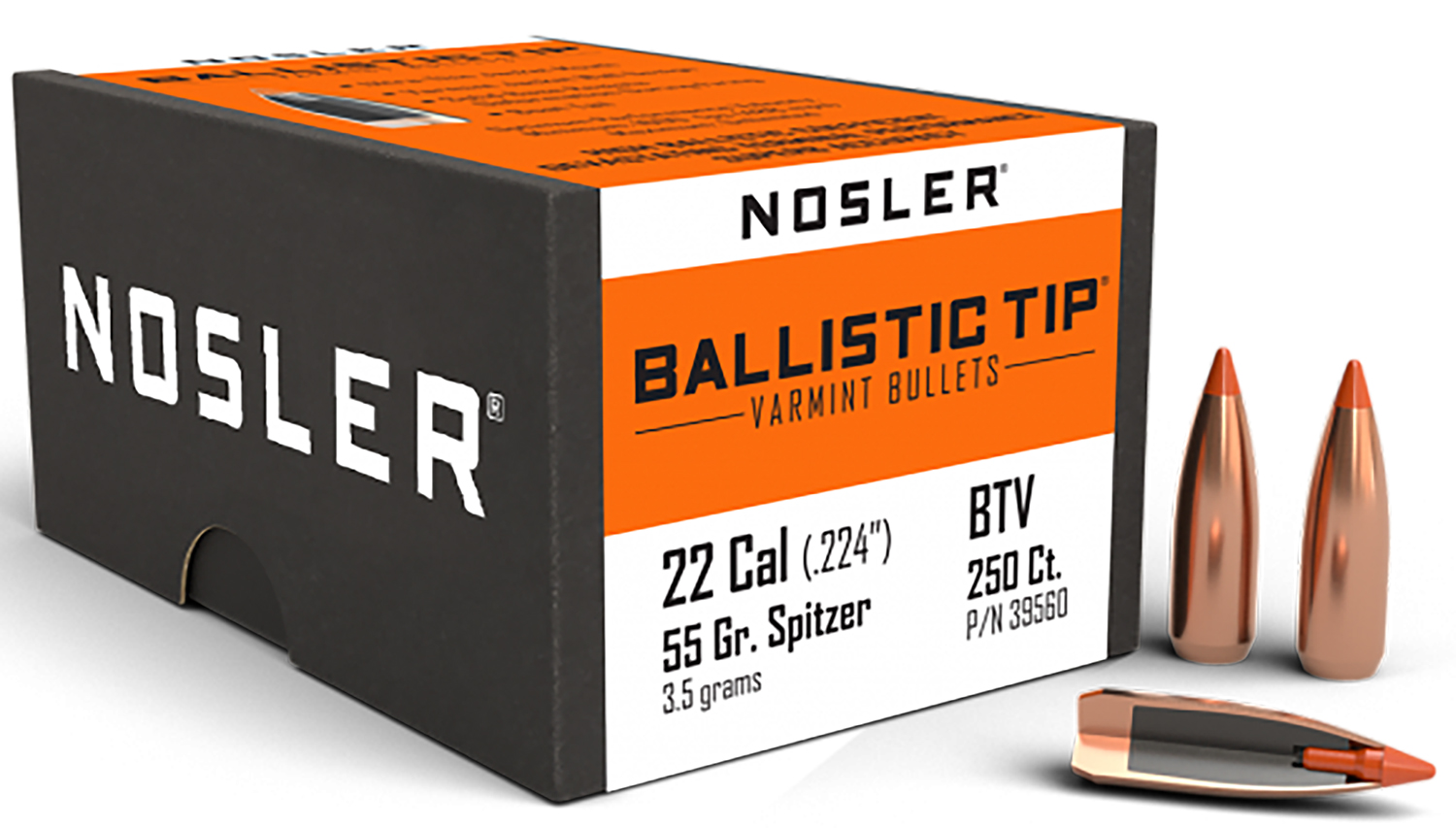
Nosler built the Ballistic Tip Varmint to do one thing better than most: turn a long shot into a clean, dramatic result. These are .22 caliber (.224 inch) 55-grain spitzer bullets with a G1 ballistic coefficient of 0.267 and a sectional density of 0.157, which gives them a flat trajectory and plenty of resistance to wind drift. Each one wears a color-coded orange polymer tip that initiates expansion the instant it meets the target while also protecting the point from dings in the magazine. This box holds 250 component bullets, so there's no case or primer here. These are strictly for handloading your own ammunition.
What Makes the Ballistic Tip Varmint Tick
The real story is in the jacket. Nosler uses an ultra-thin jacket mouth that drives violent, rapid expansion whether you're pushing these at screaming velocity or letting them coast down to lower speeds way out there. The jacket wall thickens gradually toward the mid-section, which keeps the bullet together through the barrel and in flight, then lets it come apart the way a varmint bullet should on impact. The ballistically engineered Solid Base boat tail anchors the rear and gives the expanding lead core a stable platform for big, flat mushrooms.
Loading the 55gr Ballistic Tip Varmint
At 55 grains this is one of the most popular weights in the .224 lineup, and for good reason. It runs beautifully in common twist rates found in .223 Remington, .22-250, .220 Swift, and similar cartridges, and it thrives on ultra-high velocity loads. Nosler lists 1600 fps as the practical minimum velocity for reliable expansion, with no real upper limit, so you've got room to work up a hot load without worrying the bullet won't open. The overall length runs about 0.810 inches, which helps when you're sorting out seating depth and magazine fit.
Nosler has been the name in polymer-tipped hunting bullets since they introduced the design back in 1984, and the Varmint version carries that same reputation for consistency lot after lot. If you reload for predator and vermin work and want a bullet that shoots tight groups and does real damage downrange, this one earns its spot on the bench.
Key Specifications
- Manufacturer: Nosler
- Manufacturer Part Number: 39560
- UPC: 054041395601
- Bullet Caliber: .22 Caliber (.224 Diameter)
- Bullet Weight: 55 Grain
- Bullet Profile: Spitzer
- Bullet Base: Boat Tail
- Bullet Type: Ballistic Tip Varmint
- Tip Color: Orange
- Ballistic Coefficient (G1): 0.267
- Sectional Density: 0.157
- Overall Length: 0.810 in
- Minimum Velocity: 1600 fps
- Cannelure: No
- Quantity: 250 Per Box
- Country of Manufacture: United States
What’s Included
- 250 Nosler Ballistic Tip Varmint .22 caliber 55-grain component bullets
Frequently Asked Questions
Are these Nosler Ballistic Tip Varmint bullets loaded ammunition or components?
These are component bullets only, meant for handloading. The box contains 250 projectiles with no case, powder, or primer. You'll need your own reloading components and equipment to build finished cartridges.
What cartridges work with the .224 55gr Ballistic Tip Varmint?
Any .224 caliber cartridge that stabilizes a 55-grain spitzer will run these, including the .223 Remington, .22-250, .220 Swift, and similar rounds. Check your rifle's twist rate and consult current load data for the right powder charge and seating depth. The roughly 0.810 inch overall length helps when you're dialing in magazine fit.
What velocity do these bullets need to expand properly?
Nosler lists 1600 fps as the practical minimum velocity for reliable expansion, with no real upper limit. That means these thrive on hot, high-velocity loads but will still open up at longer distances once they slow down. The ultra-thin jacket mouth is what drives that rapid, violent expansion across the velocity range.
What does the orange polymer tip on the Ballistic Tip Varmint do?
The tip is color-coded by caliber, so orange identifies this as a .22 bullet at a glance. Beyond identification, the polymer point drives rearward on impact to kick off expansion and keeps the nose from getting damaged while cycling through a magazine. It also sharpens the aerodynamics for a flatter trajectory.





Reviews
There are no reviews yet.